


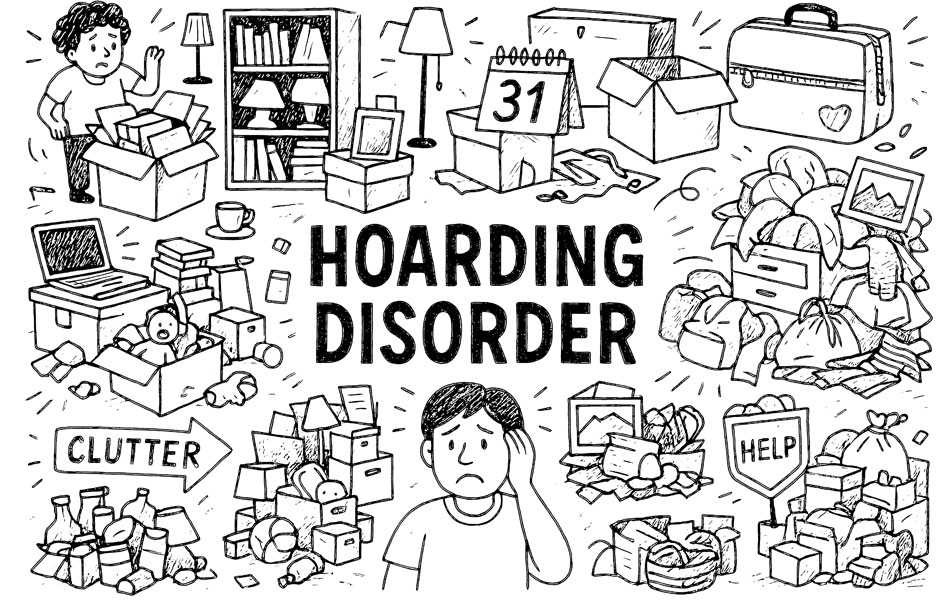
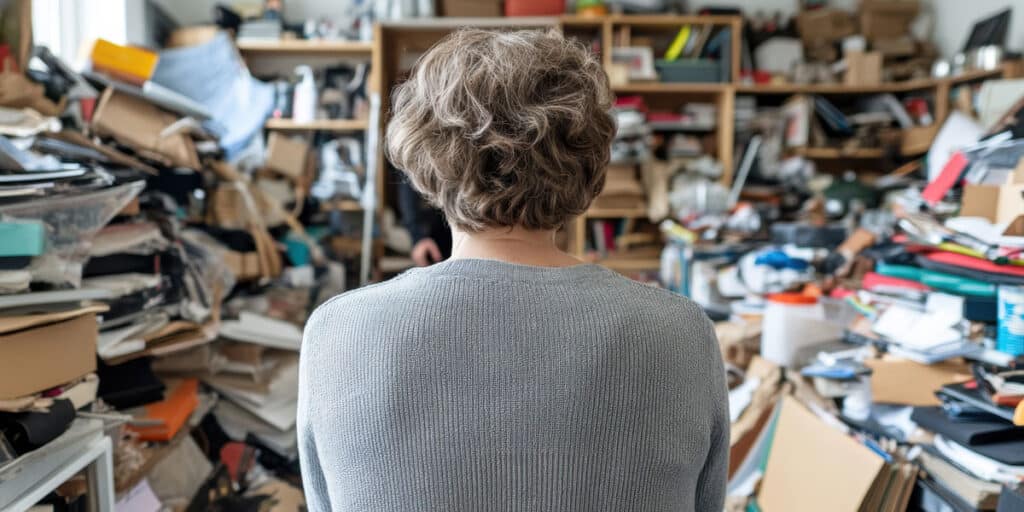
When a home becomes packed with belongings — boxes, papers, clothing, and items “saved for later” — it’s normal for families to feel overwhelmed. Many people think, “We just need to clean it out.”
But hoarding isn’t a cleaning issue.
It’s not laziness.
And it’s not “collecting gone wild.”
Hoarding is a real mental health condition that requires understanding, patience, and the right support — especially when an older adult needs to move, transition to care, or prepare a home for sale.
What Is Hoarding Disorder? (DSM-5 Definition, Simplified)
Hoarding Disorder is not just “too much stuff.” It’s a mental health condition recognized in the DSM-5 — the diagnostic guide used by doctors and therapists. In simple terms, hoarding means a person has an ongoing, very strong difficulty letting go of possessions, regardless of the item’s actual value, and the clutter becomes so overwhelming that it blocks the normal use of the home.
People with Hoarding Disorder often feel deep stress or fear at the idea of throwing anything away. They save items because they might “need them later,” because a memory is tied to it, or because letting things go feels scary or wrong.
To family members, it looks like chaos.
To the person struggling, it often feels like safety, comfort, or protection.
This is why hoarding must be approached with compassion — not judgment or fast cleanouts.
Hoarding vs. Collecting: Why They’re Not the Same
Collectors organize, display, and enjoy their items. They know what they have and where it belongs.
Hoarding is different. It creates unsafe, unlivable conditions where:
- Rooms can’t be used
- Food preparation becomes unsafe
- Bathrooms or bedrooms are blocked
- Walking pathways disappear
The problem isn’t the objects — it’s the emotional attachment, overwhelm, and loss of function.
Why Hoarding Often Increases With Age
Many families only discover hoarding behaviors in later life. These common factors play a role:
- Grief, loss, or the passing of a spouse
- Social isolation or loneliness
- Chronic pain or mobility limitations
- Depression or anxiety
- Cognitive changes or memory loss
- A lifetime of saving “just in case”
Belongings can feel like identity, security, or proof of a life well-lived — which makes letting go incredibly hard.
Health & Safety Risks Families Shouldn’t Ignore
Hoarding can create serious health and safety concerns:
- Tripping hazards
- Fire dangers
- Blocked exits
- Pests and rodents
- Mold and spoiled food
- Structural damage
- Lack of access to kitchen and bathroom areas
Even when a loved one is emotionally attached to their belongings, safety has to be addressed — gently and respectfully.
Why Fast Cleanouts Usually Make Things Worse
“Quick fixes” — even with good intentions — often backfire.
Sudden or forced cleanup can cause:
- Loss of trust
- Panic or emotional shutdown
- Trauma
- Refusal to accept future help
- Stronger attachment to remaining items
Hoarding cleanup isn’t about speed — it’s about trust, planning, and support.
Levels of Hoarding (And Why They Matter)
Hoarding varies from mild clutter to severe, unsafe living conditions. Understanding the level helps determine:
- What type of cleanup is needed
- Whether professionals must be involved
- How long the process may take
- Whether the home is safe to enter
- How to prepare the home for sale
There is no shame in any level — each requires a tailored plan.
The Right Way to Help a Loved One Who Is Hoarding
1. Start With Trust
Sit down, listen, and acknowledge feelings. This opens the door for real progress.
2. Use a Harm-Reduction Approach
Before addressing the whole home, focus on safety:
- Clear walkways
- Make a bathroom usable
- Ensure exits are accessible
- Remove spoiled or dangerous items
Small wins build momentum.
3. Work With Professionals Who Understand Hoarding
This may include:
- Hoarding-trained organizers
- Mental health providers
- Senior transition specialists
- Biohazard cleanup teams
- Social workers or case managers
Not all junk removal companies are equipped for hoarding — the emotional part matters just as much as the physical work.
4. Move at a Healthy Pace
Real change takes time. Rushing can cause setbacks.
5. Protect Dignity Every Step of the Way
Respect matters. Decisions should honor your loved one’s dignity, safety, and emotional needs.
How Long Does Hoarding Cleanup Take?
It depends on:
- Volume of items
- Safety hazards
- Number of usable rooms
- Presence of pests or biohazards
- Whether your loved one is involved
- Number of specialists required
- Preparation needed before selling the home
Some homes take days.
Some take weeks or longer.
A personalized plan works best.
Why You Don’t Need to Face This Alone
Hoarding affects everyone — the parent, the adult children, and the whole family. Emotions often run high: guilt, frustration, sadness, fear, or conflict between siblings.
You don’t have to figure it out by yourself.
We specialize in helping older adults and their families navigate complex home transitions, including situations involving hoarding or extreme clutter. We coordinate the right professionals, guide the process, protect dignity, and prepare the home for sale when the time is right.
📞 Ready to Talk? We’re Here to Help.
If you’re overwhelmed, unsure where to start, or worried about your loved one’s safety, reach out.
We offer confidential, compassionate guidance — no pressure, no judgment.
👉 Schedule a Consultation
👉 Call/Text: 520-260-3123
👉 Email: [email protected]
📘 Free Resource for Families
Download our helpful guide:
“How to Support a Loved One Who Is Hoarding: A Gentle Step-by-Step Checklist.”
Want more tips like this? Browse our latest real estate advice and buyer guides on the blog.
ABOUT THE AUTHOR
I’m Kevin Wood, a trusted professional in residential real estate who has served southern Arizona and the surrounding areas since 2005. My knowledge and experience covers a wide range of topics including general real estate, mortgages, financing, seniors, moving, and home improvement.
I can be reached at [email protected] or by phone at 520-260-3123. For the past 19+ years, I’ve helped over 600 families move in and out of southern Arizona and constantly rank among the top 10% of realtors nationwide for performance and client satisfaction.
Are you planning a move? I’m passionate about real estate and enjoy sharing my knowledge and skills in marketing.
I serve people with real estate needs in the following areas of southern Arizona: Tucson, Vail, Corona de Tucson, Sahuarita, Green Valley, Oro Valley, Marana, Picture Rocks, Catalina, Saddlebrooke, Benson, Tanque Verde, Three Points, and Red Rock.